
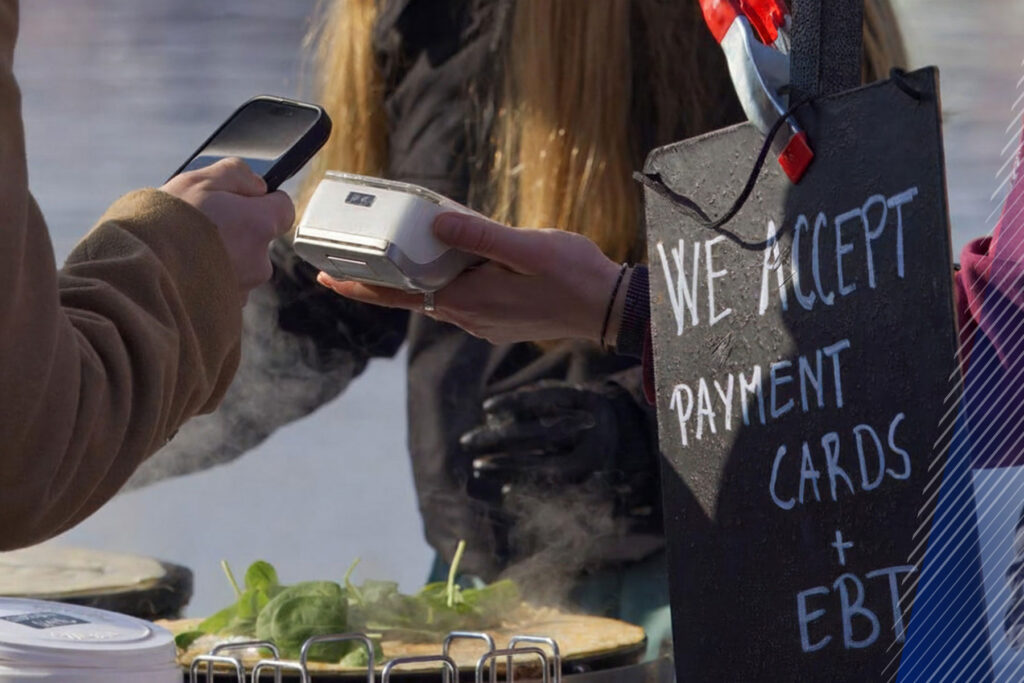
Farmers markets do not come with a fixed checkout counter, a wired terminal, or a reliable outlet nearby. Vendors set up under a tent, break down at the end of the day, and do it all again at the next market across town. That kind of setup calls for payment equipment built for mobility, not a system borrowed from a storefront. It also means thinking through how to accept SNAP benefits, since a growing number of farmers market shoppers pay with an EBT card alongside cash and cards.
Two Ways Farmers Markets Accept SNAP
Some farmers markets run SNAP through a single central terminal at an information booth, where the market itself is the authorized SNAP retailer and reimburses vendors after the fact. Increasingly though, individual farmers and vendors become their own authorized SNAP retailers and accept EBT cards directly at their own stand, without routing shoppers through a central booth. This vendor-operated model has been growing, especially among direct marketing farmers who sell at multiple markets or through farm stands, since it lets them accept payment on the spot instead of waiting on a market’s reimbursement process.
Getting Authorized to Accept EBT as a Vendor
Vendors who want to accept EBT directly need to apply for SNAP authorization through the USDA Food and Nutrition Service. The application is free, and approval gives a vendor an FNS number, which is required before any EBT-capable equipment can be activated. From there, goEBT can help get the right mobile equipment programmed and ready before market day.
Choosing the Right Mobile Terminal
Once a vendor has an active FNS number, the next step is equipment that can keep up with an outdoor, on-the-move setup. goEBT’s MOBILE payment terminal was built for exactly this kind of environment, along with curbside sales, deliveries, and other situations where a fixed countertop is not an option. Running on the goEBT+ app, the terminal combines EBT, credit, and mobile wallet processing on a single wireless device, so a vendor is not juggling separate machines for SNAP customers and everyone else.
Because the terminal is wireless and battery-powered, it works the same way at a Saturday morning market as it would parked outside a farm stand or set up at a pop-up. The device stays PCI compliant and supports EMV chip, tap, and swipe alongside EBT, so a single terminal handles the full range of ways customers want to pay.
What to Consider Before Market Day
- Signage: post a visible “EBT Accepted Here” sign at the stand so SNAP shoppers know they can pay directly, and note which items qualify
- Battery and weather care: wireless terminals run on rechargeable batteries and should be charged before each market and stored indoors between uses, since heat from a parked vehicle can damage the device
- Wireless connectivity: confirm the market location has reliable cellular coverage, since mobile terminals connect over a wireless data network rather than a wired line
- Receipt paper: keep the correct thermal paper on hand, since using the wrong type can damage the printer
None of this requires much lead time once the equipment is in hand but building it into a pre-market checklist saves a vendor from troubleshooting in front of a line of customers.
Beyond EBT: Meeting Customers Where They Pay
SNAP shoppers are only part of the picture. Farmers market customers increasingly expect to tap a card or pay with a digital wallet just like they would anywhere else, and a mobile terminal that only takes cash or EBT risks losing those sales. A wireless terminal that handles EBT, credit, debit, and contactless payments in one device means a vendor can say yes to however a customer wants to pay, without turning anyone away at the stand.
Getting Started with goEBT
Whether a market runs SNAP through a central booth or individual vendors accept EBT on their own, goEBT can help set up the right mobile equipment for the job. Reach out through goEBT’s MOBILE payment terminal page or call 800.921.1271 to talk with a representative about getting a vendor or market ready for the next market day.